Buying & logistics
Documenting reclaimed brick for green-building credits and ESG reporting
Start the evidence file when reserving the batch. Procurement, site receiving and the project assessor need a common lot number and an agreed basis for quantities.
Agree the claim before placing the order
Give the assessor the project scheme, version and candidate material. Ask whether the relevant criterion uses cost, mass or another basis, which components count and which records are required. Get that decision in writing before inserting a credit target in the tender.
Track clay separately from new components
Request a supplier declaration identifying the recovered masonry, salvage source, cutting location, SKU and batch. Keep mesh, adhesive, pointing and packaging as separate lines. Link delivery tickets and receiving photos to the same batch and installed room.
Close the quantity balance
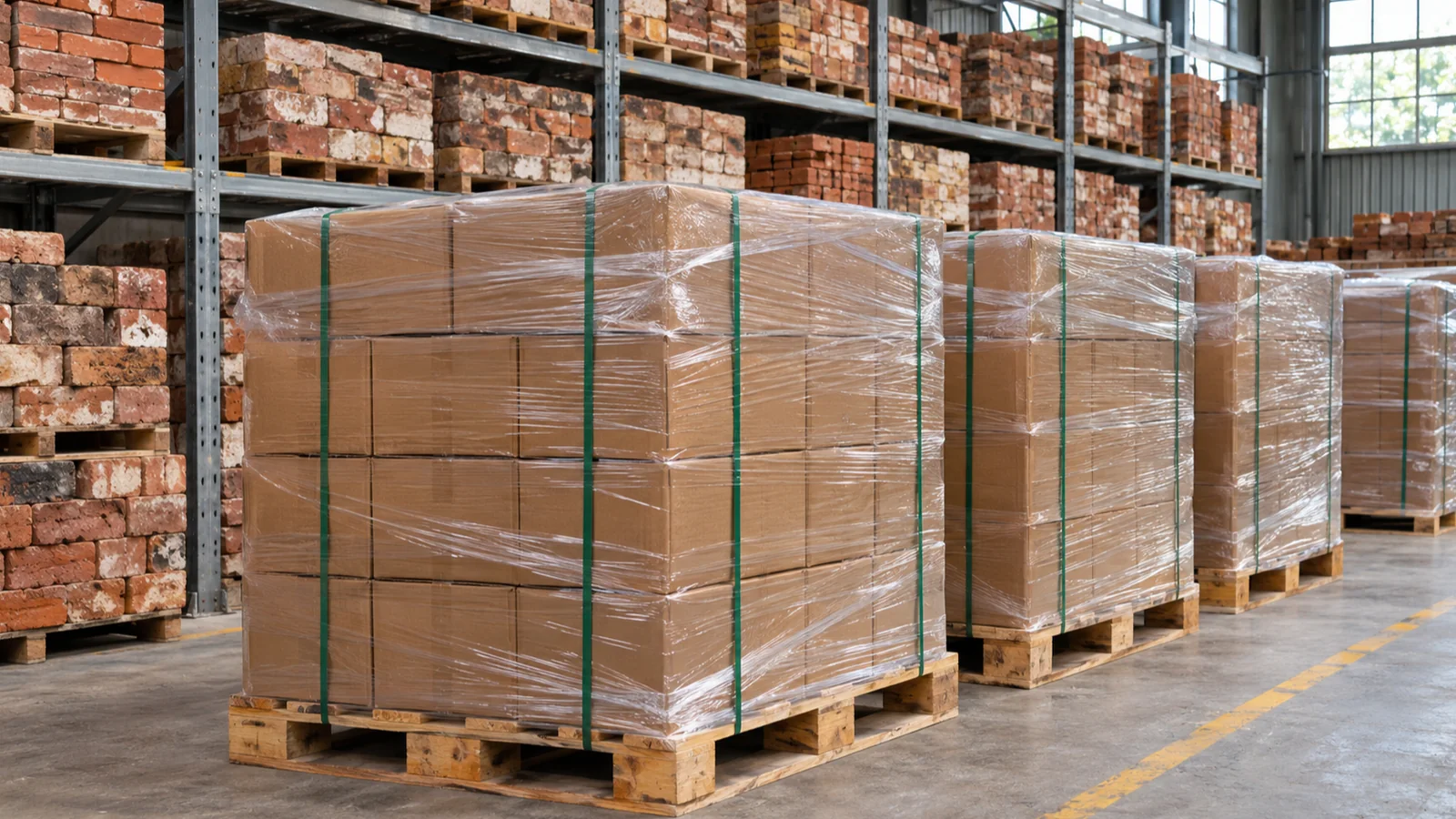
If 100 half-square-metre cartons arrive and four sealed cartons are kept for repairs, 48 m² is available for installation before cuts. Record offcuts and measured installed area separately. For a carbon claim request a product-specific assessment with its boundary, units and transport assumptions.
| Received | 100 × 0.5 m² = 50 m² |
|---|---|
| Retained for repairs | 4 × 0.5 m² = 2 m² |
| Issued before cutting | 48 m² |
Recommended products
Related markets
Buyer questions
Does buying reclaimed brick guarantee a credit?
The project assessor determines eligibility against the registered scheme and evidence. Obtain their decision for the proposed submission.
Can carton gross weight prove recovered clay content?
Request net dry material weight and a documented reclaimed fraction for the lot. Retain the weighing method and supplier declaration with the invoice.